
What to Consider When Choosing Dancewear
How to choose Dancewear
Whether it’s beginner dance lessons, or on stage performing, what you wear can make a huge difference to how you feel and perform. So how to choose dancewear can be an important part in your dance journey.
Ballet can be a very technical performance art, and as such ballet can be intimidating, while also being exhilarating. For students new to ballet, your ballet teachers will have a set of rules they will expect their dance students to adhere to. Teachers expect their students to be respectful and to listen to the teacher, to be punctual, to receive feedback to improve technique, and most importantly your ballet class will have a uniform that you will be required to wear.
The ballet dress code is important for the best functioning of your dance class. If you, or your child are starting ballet, adhering to the dancewear uniform code is critical. Ballet is a rigorous and disciplined artform. A uniform is used to create a sense of discipline and professionalism within dance classes and aids in establishing a classroom culture of respect and professionalism. Appropriate dance shoes are also important for reinforcing strong and correct technique.
Finally, a dance uniform will create a sense of unity and teamwork when the troupe are all dressed the same.
Often when you enroll, your dance school will provide a uniform list. You will just need to follow this list when you purchase your uniform.
How to choose dancewear
So how do you choose dancewear that will be comfortable and perform to your expectations? Here are some key things to consider when choosing your dance clothing.
Match your clothing to the activity
Make sure that the dancewear you choose is suitable for the dance type you are doing. One key question to consider is whether the fabric will stretch with your movement. Enter the leotard.
Dance leotards are generally made from cotton/lycra, spandex or tactel, all excellent materials for providing plenty of stretch and flexibility.
Choose for comfort, size and fit
Nothing will break your concentration on what you are doing than wearing something that is particularly uncomfortable. Choose dancewear that is fitted so that your teacher or audience can see your form. But not too tight or badly cut so that it’s makes you uncomfortable.
There’s nothing worse than a dance outfit that’s riding up or compressing you in all the wrong places.
Aesthetics
The look of your dancewear outfit is important, because every dancer wants to look good, whether it’s during dance class or on stage. Dancewear needs to be body hugging to reveal the body’s lines to your teacher and audience. Depending on the genre of dance, there are preferred uniforms and costumes.
For example, ballet classes prefer to have a ballet leotard, thigh length ballet skirt in either wrap or circle style, ballet tights and ballet shoes. Jazz dancers on the other hand, will be required to wear jazz shoes, usually leather, perhaps a leotard teamed with jazz shorts or sometimes jazz pants which elongate the legs.
Tap dancers will need tap shoes fitted with metal tap plates to give that distinctive tap sound. Tap shoes come in various styles, the main being Mary Jane style with a strap and buckle, or oxford lace up.
Performance Costumes
Many dancers will be required to perform on stage or in front of audiences, requiring a different dancewear outfit than dance class wear.
While a performance outfit must look great on stage, it also needs to be able to handle heat from lights and sweat. Therefore consideration of whether the fabric will trap or release heat and how it deals with sweat is very important.
Some fabrics, such as tactel are manufactured specifically to deal better with sweat than some other fabrics, and as such has become a popular fabric for dancewear manufacturing. This is important to consider, as no one wants to perform on stage in a wet and stinking costume.
Dress Codes for Ballet
Leotards
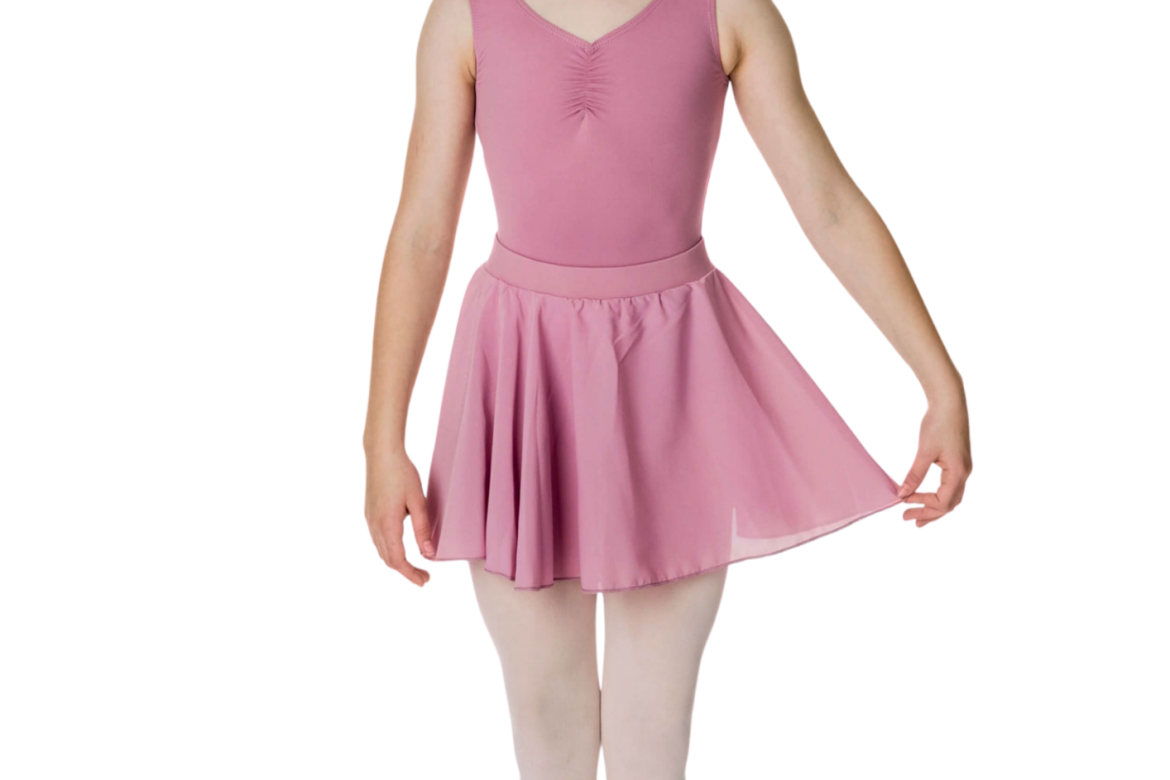
The most popular item for a ballet class starts is a leotard, which is a versatile piece of dancewear. Leotards are generally available in a huge range of colours, designs, and styles. Leotards are made in various styles and can be thin strap camisole, thick strap, short sleeve and long sleeve. They are usually cut the same shape at the legs as swimwear, but can also be unitards or biketards with built in shorts.
A good fitting ballet leotard should accentuate your best features, suiting your body shape while supporting a full range of motion while stretching and performing. A well-fitting leotard should hug your body without being too tight.
Ballet Shoes
Ballet shoes or ballet slippers will be required for every ballet class and are an essential part of a ballet dancer’s wardrobe, critical for both beginners and senior dancers.
Dance shoes are normally leather to begin with and are necessary for foot support and flexibility when developing strength and learning ballet techniques.
As ballerina’s progress through the levels, they may move in to pointe shoes which are often satin and will need to be carefully fitted.
Ballet Tights
Ballet tights can be footed or convertible (which have a small hole underneath so can be worn footed or footless for a combination of class types). Ballet tights are an important part of a dancer’s attire.
Tights are usually worn in a pale ballet pink or salmon (prima) pink to match the ballet shoes, so that the dancer’s legs and feet are blended and seem as one. Ballet tights also offer support as well as the aesthetic.
Tights will be soft and flexible, providing some support while elongating the leg line for an elegant appearance.
Ballet Skirts
Although not always compulsory, ballet skirts are a popular part of the dancewear uniform. Many classes will see ballet skirts being worn as part of the uniform. These are typically worn over the leotard in a matching colour, and will be mid-thigh or above knee length.
Typically, ballet skirts will be either wrap (ties) style or full circle with a wide elastic band and the skirt is soft flowing chiffon or sometimes a nylon blend. The shorter skirt length is preferred to reveal more of the legs and enhance the form.
Ballet Buns
Maintaining a neat and practical hairstyle for ballet class and performances is expected, as it helps in focusing on technique and performance. The most iconic ballet hairstyle is the ballet bun. This universally recognised bun is quintessentially 'ballet' and it serves to keep hair securely in place while avoiding the distraction of unruly hair.
The high ballet bun is the most widely adopted hair style, however there are some variations, including the low chignon and French twist which senior ballerinas may prefer.
You will need a little bun kit to perfect a ballet bun and some practice. The key ingredients needed to create a ballet bun are a fine hairnet, a comb or brush, bobby pins, bun hairpins and hairspray. For more on how to do the perfect ballet bun click here Ballet bun.
Warm up Dancewear
Warming up before class or performance and wearing proper dance warm-up gear will help prepare the body for rigorous practice and performance. Keeping warm while you warm up your body for the rigors of a dance class or performance will help to keep muscles warm, prevent cramps, help with flexibility and ultimately hopefully prevent injuries.
Some of the most popular warm-up dancewear are long dance or jazz pants, dance shorts worn over leotards, leg warmers, warm up boots, crossovers worn over leotards and specific dance long sleeved warm up tops.
A pre dance warm up is a crucial part of any dance practice or performance. It involves performing specific exercises and movements to prepare the body physically and mentally for the demands of dance.
The importance of warming up cannot be overstated, as it provides numerous benefits that enhance a dancer’s overall performance and reduce the risk of injury.
Click here for more information on the important of warming up Dance Warm Up & Exercises.
Conclusion
Selecting and wearing the correct dancewear is not just about looking like a dancer, it’s a key part of the traditions and discipline of ballet and dance.
Each piece of your dance uniform helps to support your dance technique and is an integral part of ensuring the safety and learning is preserved in this ancient art form. By wearing the right dancewear and honoring your dance schools request to wear a uniform, you are setting the groundwork for success in your dance journey.
Read More
Categories:
Dance Guides & Tips
