
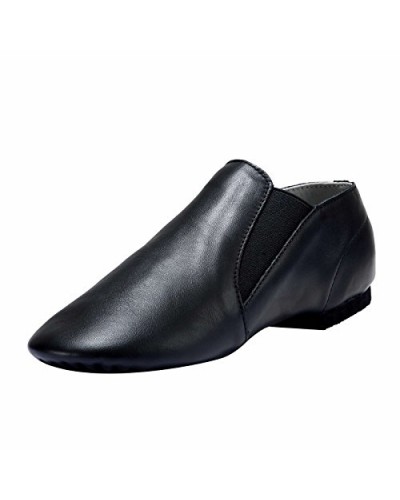
What is a twin‑gore slip‑on jazz shoe?
What is a twin‑gore slip‑on jazz shoe?
A twin gore jazz shoe is a style of jazz/dance shoe that:
Has two elastic inserts (“gores”) on either side of the instep (or along the vamp or sides) to allow easy slip‑on and snug fit.
Is slip‑on (no laces or straps) — you push the foot in and the elastic expands to allow entry.
Often comes in split‑sole or semi‑split sole versions, where the sole is divided under the arch to allow greater flexibility
Usually has a small heel.
This twin gore design helps combine the convenience of a slip‑on with a closer, more adaptive fit than a plain full slip vamp might allow.
Because of the elastic gores, you want to check how stretchy and durable those inserts are, how well they “hug” the foot, and their positioning (so they don’t cut into the foot or gape when flexed).
Black vs Tan: Which colour (and when)?
In jazz/dance shoes, colour is both aesthetic and functional:
Black is the classic, “universal” choice. It works with most costumes and class uniforms, doesn’t show scuffs as obviously, and is standard in many studios.
Tan (or “caramel,” “beige,” etc.) is often chosen in performance settings to visually elongate the leg line (especially on stage) or to “disappear” against the skin of the dancer’s foot (especially when worn with darker outfits).
Sometimes, studios or performance groups mandate a specific colour (e.g. “black jazz shoes” only, or “skin tone/tan for stage”). Always check the dress code first.
In practice, black tends to be more forgiving in everyday use (class, rehearsals) because it hides marks and is less “contrasting.” Tan can be more prone to visible scuffs or dirt marks, so its upkeep is somewhat more critical.
What to look for in a quality leather slip‑on jazz shoe
When evaluating leather twin‑gore jazz shoes, here are key features and subtle points to check:
Leather quality & suppleness
Look for a soft, supple leather (often glove leather or high‑quality kids’ leathers) that will break in and mould to the foot.
It should not be so stiff that the dancer has difficulty pointing or articulating the foot.
Check for even, well‑finished seams (no rough edges or puckering).
Elastic gore inserts
The elastic should be durable, with enough stretch but good resistance (so it returns shape).
The stitching between the elastic and leather should be secure and reinforced (so it doesn’t tear or loosen).
The position of the gores matters — they should be placed so that when the foot flexes or points, the elastic doesn’t dig or gap.
Sole style and material
Split sole allows more flexibility and better foot articulation. Many dancers prefer split or partial split soles for movement. Balletstuff’s twin gore model offers a split sole option. Balletstuff : Children's Dance Wear
EVA or rubber sole and heel: Most jazz shoes have small EVA/rubber patches on the forefoot for durability and grip, while maintaining flexibility in the arch, as well as a small heel.
The sole should be thin enough to allow “feel” of the floor but durable enough to withstand class use.
Arch/instep support & interior lining
Though jazz shoes are not designed like running shoes (i.e. heavy support), a good internal lining (e.g. cotton or moisture‑wicking material) helps comfort, reduces slipping, and absorbs sweat.
Some shoes include a neoprene or stretch arch insert to “hug” the top of the foot during flex/point without causing bunching.
The transition between the upper leather and the sole should be smooth (no abrupt edges or stiff join) so it doesn’t rub.
Stitching, reinforcements, quality of finish
Inspect the stitching along seams, the joint between sole and upper, and around the heel; it should be consistent, tidy, and strong.
Look at how the heel edge is finished — internal padding or reinforcement helps the heel cup retain shape.
If there’s any glue or edge finishing, it should be clean (no blobs or excessive glue visible).
Flexibility & break‑in potential
The shoe should flex naturally at the metatarsal area; you should be able to roll through the foot.
New leather shoes may feel a bit snug at first but should give slightly with wear; however, they should never feel painfully tight.
Avoid shoes that feel floppy or weak in structure — they should retain some integrity.
Fit, Length & Sizing — what to watch for
Getting the right fit is probably the trickiest part. Here are the main principles and a look at Balletstuff’s approach:
Key fit principles
Jazz shoes should feel snug, almost like a “second skin” or “lotus glove,” but without pinching or cramps.
The toes should be close to (but not bulging over) the end of the shoe when standing flat, so that in relevé or demi‑pointe the foot can articulate without slipping forward.
When flexed or pointed, there should be no excess material that folds or bunches (especially under arch or instep).
The heel should sit firmly (no slipping out), but without binding.
Across the width, the shoe should hold the foot securely — for dancers with wider feet, choosing a slightly larger width or a more accommodating style is worthwhile.
Because children’s feet grow, some allowance is often made — but not too much, or the shoe will flap or lose control.
Sizing advice
Balletstuff gives specific guidance for ballet/jazz shoes:
Note that sizes vary between brands, and you should not assume your street shoe size will match your dance shoe size.
Recommendation is to measure the foot (heel to longest toe) using paper tracing or a flat ruler method, then add 1 cm wiggle room, and consult the size chart. Balletstuff : Children's Dance Wear
Balletstuff dance shoes are medium width; if the foot is wider than average, going up a size may be better.
Often the jazz shoe is “one size down from your street shoe/school shoe size,” because dance shoes are meant to be snug.
Always check foot length before ordering.
Other tips to get size right:
Using an insole to fill minor extra space (for shoes bought slightly big to accommodate growth) and then removing it later as the child springs into the full length, is always an option.
Always try on dance shoes with the same type of tights or dance socks you will wear in class, as this can change the fit
Practical steps to get the size right
Measure both feet (feet are often slightly different lengths). Use the longer measurement + 1 cm wriggle room.
Compare to the specific brand’s size chart (e.g. Balletstuff’s chart) rather than relying on generic or street‑shoe conversion tables.
If in between sizes, choose the larger and consider using an insole/cushion until the foot catches up.
Test by standing and relevé/demi‑pointe (if safe) in the shoes — the toes should not hit the front in flat, and in relevé there should be no slipping or uncomfortable pressure.
Check how the shoe behaves under movement (flex, point, pivot). Any compression or gaping may indicate a mismatch.
Because dance shoes are snug, many dancers find that their ballet/jazz shoe is a bit “smaller” in number than street shoes; this is normal.
Care, cleaning & storage: how to keep them lasting
Leather twin gore jazz shoes require fairly careful upkeep. Here’s how to maintain them:
Cleaning and maintenance
After each use, wipe the surface with a soft, dry cloth to remove dust and residual sweat/dust.
Spot clean with a damp cloth (just water or a gentle leather cleaner diluted), avoiding soaking the leather.
Use a mild leather conditioner (sparingly) periodically to keep the leather supple (especially in dry climates). Always test on a small hidden area first.
Avoid exposure to extreme heat (radiators, direct sunlight) which can dry out, warp or crack the leather.
If the elastic gores or internal lining becomes stained or sweaty, gently dab (don’t scrub) with a mild cloth and allow to air dry fully before storing.
Some dancers use a bit of neat’s-foot oil or specialized leather cream (sparingly) to soften stiff shoes — but use extremely cautiously so you don’t over‑soften or discolour.
Drying & airing
After class or rehearsal, allow shoes to air out fully before storing — moisture trapped inside can degrade both leather and elastic.
Use a shoe tree (if small enough) or stuff with acid‑free paper (not newspaper) to help maintain shape while drying.
Do not dry shoes in direct heat (e.g. heaters), as this may warp or shrink them.
Storage
Store in a cool, dry place.
Avoid stacking heavy items on them (which may deform the shape).
Keep away from direct sunlight or humidity extremes.
Use a breathable fabric bag or a dust cloth cover to avoid trapping moisture.
If possible, store them sole to sole (i.e. left shoe against right) or use a divider to keep each pair’s shape.
Occasionally rotate between two pairs of shoes (if you have extras) so one pair always has time to rest, air out, and recover elasticity.
Summary & key takeaways
A twin gore leather slip‑on jazz shoe offers a good balance of ease and fit; ensure the elastic inserts are robust and well‑placed.
Choose black for practicality and versatility; tan for stage aesthetics or leg‑line effect (but be prepared for more visible wear).
Quality features include supple leather, well‑stitched seams, good internal lining, and a sole design (split/semi‑split) that maintains flexibility while offering durability.
Fit is critical. Use precise measurements + brand charts (like Balletstuff’s), allow minimal wiggle room (≈1 cm), and test during movement. Balletstuff advises that dance shoes often run a size down from street shoes.
Clean gently, condition sparingly, air fully between uses, and store in a shape‑maintaining, breathable fashion.
Read More
Categories:
Jazz Dance