
Why Tap Dance is Good for Children
Why Tap Dance is Good for Children
Tap is more than just fun—it offers lots of developmental, physical, social, and emotional benefits:
Category
Key Benefits
Physical / Motor Skills
Improves coordination, balance, rhythm, agility. Teaching footwork and timing helps develop gross motor skills.
Cognitive & Academic
Learning rhythm, patterns, timing helps with maths (fractions, proportions), memory & sequencing. Improves listening skills, focus.
Musicality & Creativity
Because tap uses the feet as percussion instruments, children learn musicality, timing, syncopation. They learn to listen, improvise, create rhythms.
Social / Emotional Development
Working in groups, following class, performing gives confidence. Builds patience, discipline, teamwork. Achieving goals (like mastering steps or passing exams) boosts self‑esteem.
Transferable Skills
Tap’s rhythm and coordination help with other dance styles, sport, even speech or music. Also resilience (learning through mistakes), attentiveness
How to Get Started in Tap Dance
Here are steps and tips for beginning tap:
Find a studio
Choose a dance school with good reviews, qualified teachers, safe flooring, and beginner tap classes.
Observe a class if you can—see the teaching style, how children are treated, and whether it feels positive and inclusive.
Age / readiness
Many kids start around age 4‑6, but earlier is possible depending on attention span, physical coordination. Younger kids may begin with simpler movement, introduction to rhythm before full tap steps.
Class frequency
Once per week is standard for beginners. More frequent (2‑3 times) if your child is really enthusiastic or progressing fast.
Trial classes
Do a trial (many studios offer a free or low‑cost trial) so the child can see if they enjoy it without commitment.
Set goals
Whether learning for fun, performance or exams, setting small goals (learning basic steps, routines, rhythms) helps maintain interest and progress.
What Do You Need (Equipment / Attire)
Starting out usually isn’t too gear‑heavy. Here’s what’s needed:
Item
Why It Matters / What to Look For
Tap shoes
These are shoes with metal taps (plates) on heel and toe. For beginners: light‑weight leather or synthetic, good fit. Need appropriate sole (non‑slip surface) and secure fit to avoid slipping.
Clothing
Comfortable dance wear: leggings or dance pants, dance skirt/tights, or shorts. Clothing that allows movement without tripping. Hair tied back.
Socks / tap pants
Some studios require specific dance socks. Tap pants (over‑pants) help avoid the sharp sound of taps scratching floor.
Floor type
Wood sprung floor is ideal. Concrete/hard surfaces can damage taps or be harsh on joints. Studio should have appropriate flooring.
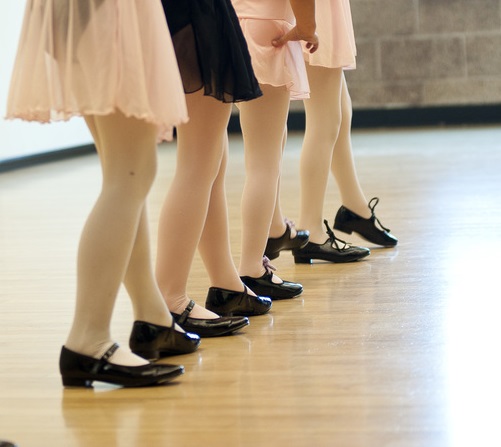
Mary Jane tap shoes are usual for girls and Oxford tap shoes for boys and can be found online at Balletstuff.
How Expensive Is It?
Costs vary depending on location, studio prestige, class frequency, and gear.
Cost Component
Ballpark Estimates in Australia*
Tap shoes
Beginner kid’s leather or synthetic tap shoes could cost somewhere between AUD $45‑$100 (maybe more for higher quality brands).
Class fees
Weekly class might run anywhere from AUD $15‑$30+ for a small, basic class; in large city or more high‑end studios, fees may be more. Additional fees may be required for performance, costumes and exams.
Uniform / attire
Some investment in dancewear, possibly specific uniform pieces if studio requires.
Exams / syllabus fees
If following a formal syllabus, there are typically exam fees (for assessments, grading, certificates). These vary, possibly in the tens to low hundreds of dollars depending on the level.
Miscellaneous
Travel to studio, maintenance (taps, shoe repairs), performance costs if involved.
*These are rough; actual costs will vary a lot by studio, state, travel, etc.
How to Care for Tap Shoes
Fit matters: Tap shoes should fit well. A bit snug is okay, but not painful. If too big, the foot may slide and you could slip. Ensure straps / laces are secure.
Tap maintenance:
Keep taps clean and dry — wipe off dust or moisture after use.
Tighten tap screws regularly (but carefully) to avoid rattling or losing taps.
Replace worn taps/plates as needed.
Occasionally rub the taps with sandpaper or file to remove burrs (so sound stays clean).
Shoe sole care:
Avoid walking outside in tap shoes (rocks/dirt damage taps).
Store in a dry place; let them air out to prevent odours.
General shoe care:
Use shoe bags/dust covers.
For leather: condition lightly if leather, avoid extreme heat or moisture.
Exams & Syllabi in Australia
Yes—there are structured examinations and syllabi for tap in Australia. Some of the major ones:
Australian Teachers of Dancing (ATOD): Offers examinations in Tap (along with Ballet, Jazz etc.).
BAL (Ballet Australasia Ltd): Their syllabus includes Tap, with junior through senior grades; exams include things like rhythm, speed, varied styles, presentation.
Glenn Wood Tap (GWT): A tap syllabus with levels/grades; some studios use GWT and teachers are trained in it. Exams are part of GWT curriculum.
Tap Mode: Another examination option; they have levels (Pre‑1 through Level 10) so students can track progression.
Studios often offer exams once a year, which are optional in many cases; some require them for certain performance or elite streams.
Some of Australia’s Best Tap Dancers & Tap‑Related Names
Here are a few well‑known Australian tap dancers and companies:
Dein Perry — probably the most famous; creator of Tap Dogs, choreographer, performer.
The Tap Pack — a modern show/ensemble in Australia (with creative directors Thomas Egan & Jordan Pollard) that is doing innovative work in tap performance.
Other notable names from the tap community include Adam Garcia and Christopher Horsey.
What to Do Next / How to Choose A Tap Dance School Locally
To get started and choose well:
Decide your area – pick a studio close by so travel is manageable.
Trial a class – many studios offer a free or low‑cost trial. Helps see whether your child’s into the teacher, style, class size.
Ask about syllabus / exams – if you want a structured plan, ask whether the studio uses GWT, BAL, ATOD, etc. Ask what exam fees are, how often they run.
Check class timetable vs your schedule – ensure it fits with school / other activities.
Consider cost vs value – more than just the class fee: costume/performance fees, shoes, maintenance etc.
